Introduction
**Congenital Hepatic Fibrosis (CHF)** is a rare, inherited developmental disorder that primarily affects the liver. Present from birth, this genetic condition is characterized by the malformation of the embryonic bile ducts and the progressive development of scar tissue (fibrosis) within the portal areas of the liver.
While the liver's primary functional cells (hepatocytes) often remain healthy and continue to perform their normal metabolic duties, the structural changes caused by CHF can lead to significant complications, most notably **portal hypertension** (increased blood pressure in the portal vein system).
## The Role of the Liver and How CHF Affects It
The liver is one of the body's largest and most vital organs, responsible for filtering toxins, processing nutrients, and producing bile to help digest fats. In a healthy liver, a vast network of bile ducts smoothly transports bile out of the liver and into the intestines.
In individuals with Congenital Hepatic Fibrosis:
- * **Bile Duct Malformation:*The embryonic development of the microscopic bile ducts is disrupted, leading to irregular, dilated, or excess channels (often referred to as a ductal plate malformation).
- * **Portal Fibrosis:** The body responds to these abnormalities by forming bands of dense fibrous tissue (fibrosis) around the portal spaces (the areas containing blood vessels and bile ducts entering the liver).
- * **Blood Flow Obstruction:** This thick scar tissue constricts the portal veins, restricting normal blood flow through the liver and causing blood pressure to build up in the portal system.
## Causes and Genetic Link
CHF is an **inherited autosomal recessive genetic disorder**. This means a child must inherit two copies of the mutated gene (one from each parent) to develop the condition.
It is frequently associated with **ciliopathies**—disorders affecting the tiny, hair-like structures (cilia) on the surface of cells that help regulate development. Because of this shared genetic pathway, CHF rarely occurs in isolation. It is commonly linked with fibrocystic kidney diseases, most notably:
* **ARPKD** (Autosomal Recessive Polycystic Kidney Disease)
* **Caroli Syndrome** (dilation of the larger intrahepatic bile ducts)
* **Nephronophthisis**
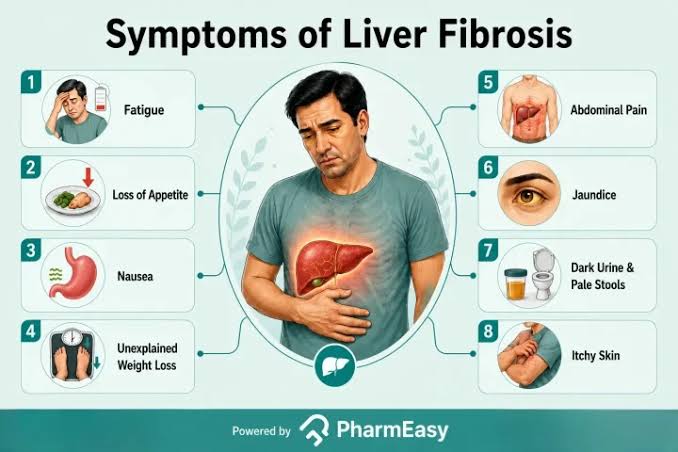
## Symptoms and Clinical Presentation
The signs of CHF can vary widely from person to person. While the condition is present at birth, symptoms may not become apparent until childhood, adolescence, or even early adulthood. The most common clinical features include:
* **Splenomegaly (Enlarged Spleen):** Due to portal hypertension, blood backs up into the spleen, causing it to swell. This is often the first physical sign detected during a routine exam.
* **Gastrointestinal Bleeding:** Increased pressure causes the blood vessels in the esophagus and stomach to swell (varices). These fragile walls can rupture, leading to life-threatening internal bleeding (vomiting blood or passing black, tarry stools).
* **Hepatomegaly (Enlarged Liver):** The liver may feel unusually firm and enlarged upon physical examination.
* **Recurrent Cholangitis:** Bacterial infections of the bile ducts can occur due to bile stagnation, leading to fevers, chills, and jaundice (yellowing of the skin and eyes).
> **Note:** Unlike classic liver cirrhosis, the overall synthetic function of the liver (its ability to make proteins and clot blood) usually remains remarkably well-preserved in CHF patients for a long time.
>
## Diagnosis
Diagnosing CHF requires a combination of clinical evaluation, imaging, and histopathological analysis:
1. **Ultrasound and CT/MRI Scans:** Used to visualize structural changes in the liver, check for an enlarged spleen, evaluate blood flow in the portal vein, and look for co-existing kidney cysts.
2. **Liver Biopsy:** The definitive method for diagnosing CHF. A small tissue sample is examined under a microscope to confirm the presence of characteristic portal fibrosis and malformed embryonic bile ducts.
3. **Genetic Testing:** Can identify mutations in genes associated with CHF and related syndromes (such as the *PKHD1* gene).
## Treatment and Management Strategy
Currently, there is no cure to reverse the genetic malformation of CHF. Treatment focuses entirely on managing complications, preserving organ function, and improving quality of life:
### 1. Managing Portal Hypertension
* **Medications:** Beta-blockers may be prescribed to reduce pressure in the portal veins.
* **Endoscopic Band Ligation:** A procedure to tie off and stabilize bleeding varices in the esophagus.
* **TIPS (Transjugular Intrahepatic Portosystemic Shunt):** A radiological procedure that creates a bypass route for blood through the liver, significantly lowering portal pressure.
### 2. Treating Infections
* **Antibiotics:** Prompt and aggressive antibiotic therapy is essential if a patient develops symptoms of bacterial cholangitis (bile duct infection).
### 3. Monitoring Kidney Function
* Regular screenings, blood tests, and renal ultrasounds are crucial to manage any co-existing polycystic kidney disease, managing high blood pressure, or addressing progressive renal failure.
### 4. Organ Transplantation
* In severe, advanced cases where portal hypertension cannot be controlled, or if there is concurrent end-stage renal failure, a **liver transplant** or a combined **liver-kidney transplant** may be considered as a long-term cure.
## Conclusion
Congenital Hepatic Fibrosis is a complex, lifelong condition that demands a multidisciplinary approach involving hepatologists, nephrologists, and genetic counselors. While the diagnosis can be daunting, early detection, proactive monitoring of portal hypertension, and specialized management of associated kidney issues allow many individuals with CHF to lead stable, fulfilling lives.